

If you’re researching what size a 625W solar panel is, you’re likely planning a real project—roof layout, container loading, racking design, or a utility-scale bill of materials. Wattage alone doesn’t tell you the physical dimensions, but it does narrow the field: most 625W modules are large-format panels built with high-efficiency cells and dense layouts. Below is a practical sizing guide, plus a clear comparison to the popular 210mm 650–675W solar panel class so you can choose the best fit for your site.
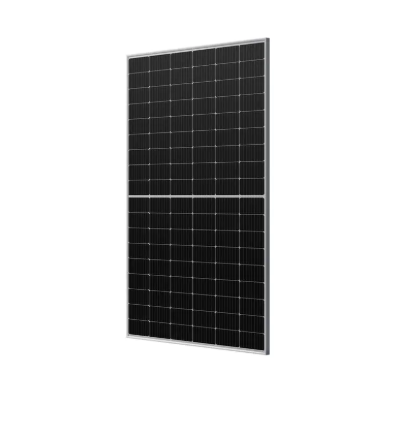
Typical size range for a 625W solar panel
Most 625W panels are “big modules,” often in the same family as 600W+ products used in commercial and utility installations. In general, you’ll see dimensions in the neighborhood of:
- Length: ~2.3–2.5 meters
- Width: ~1.1–1.3 meters
- Area: ~2.5–3.1 m²
- Weight: often ~30–40 kg (varies by frame/glass)
Why the wide range? Manufacturers reach 625W using different cell formats (182mm or 210mm), different cell counts, and different module widths designed to optimize shipping and mounting. The exact answer is always on the datasheet, but the ranges above are accurate enough for early-stage layout and feasibility.
What determines the physical size (not just the wattage)?
A module’s watt rating depends on multiple design factors, and those directly influence size:
- Cell size and layout Large-format cells reduce the number of cells needed for high power. Many high-watt panels are built on 182mm or 210mm cells. The keyword you provided—210mm 650–675W solar panel—typically indicates an even larger platform optimized for maximum power per module.
- Cell count (and half-cut design) Modern modules often use half-cut cells to reduce resistance losses and improve performance in partial shading. Cell count and arrangement affect both the length and the final wattage.
- Efficiency Higher efficiency means more watts from the same area. Two “625W” products can differ in size if one has better cell efficiency or different glass/transparency/layer stack.
How a 625W panel compares to a 210mm 650–675W solar panel
If you’re considering a 625W module, you’re likely also seeing products marketed as 650W, 660W, 670W, or 675W—often based on 210mm cell technology.
Here’s the practical takeaway:
- 625W panels: Usually slightly smaller and lighter than 650–675W giants, making them easier to handle on rooftops and tighter commercial sites. They can be a sweet spot where logistics and installation labor remain manageable.
- 210mm 650–675W panels: Often larger and heavier, but they reduce module count for a given DC capacity. That can lower costs in racking hardware, clamps, wiring runs, and installation time—especially on ground-mount and utility projects.
So the “best” choice depends on constraints:
- Limited roof space? Higher watts per module may help, but check fire setbacks and walkways.
- Labor/handling limits? 625W may be easier for smaller crews.
- BOS (balance of system) optimization? 650–675W can reduce components per MW.

A quick rule to estimate panel size from wattage
You can estimate area using efficiency:
- Area (m²) ≈ Power (W) ÷ (1000 × Efficiency)
Example: a 625W panel at 21.5% efficiency
Area ≈ 625 ÷ (1000 × 0.215) ≈ 2.91 m²
That aligns with the real-world “large module” sizes above.
Buying checklist before you finalize
To avoid surprises, confirm these on the datasheet:
- Exact dimensions (L × W × thickness)
- Weight and packaging count per pallet/container
- Mechanical load rating (wind/snow)
- Electrical specs (Voc, Isc, temperature coefficients)
- Compatibility with your inverter and string design
Final answer
A 625W solar panel is typically a large-format module around ~2.3–2.5 m long and ~1.1–1.3 m wide, with exact size depending on the manufacturer and whether it’s built closer to an 182mm or 210mm platform. If you’re comparing it to a 210mm 650–675W solar panel, expect the 650–675W option to be generally larger/heavier but potentially more cost-efficient at scale.
Post time: Jan-09-2026


